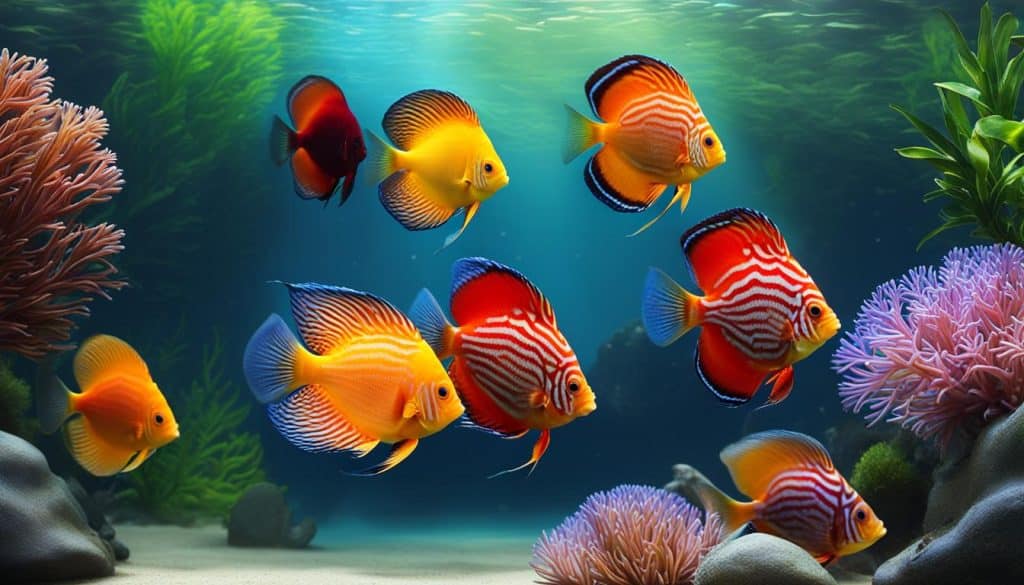
Welcome to our guide on Discus Fish, the colorful and fascinating aquatic creatures that can enhance your aquarium experience. Our aim is to provide you with the essential information you need to know about Discus Fish, from proper care and tank setup to breeding and feeding techniques.
Whether you’re a new fish owner or an experienced aquarist, we invite you to dive into the world of Discus Fish with us.
Key Takeaways:
- Discus Fish are fascinating and colorful aquatic creatures that can enhance your aquarium experience.
- We provide essential information on proper care and tank setup, breeding and feeding techniques, and more.
- Our guide is suitable for both new fish owners and experienced aquarists.
- For more information on the LA Pet Fair, contact us directly at (619) 281-PETS (7387).
- You can also apply to be one of our vendors at our next and upcoming show: http://5k8.f16.mywebsitetransfer.com/vendorlist.
Understanding Discus Fish Care and Tank Setup
If you want to take care of discus fish, it’s essential to have a good understanding of their care requirements and the proper setup for their tank. Here are the critical factors to keep in mind:
Discus Fish Tank Size and Setup
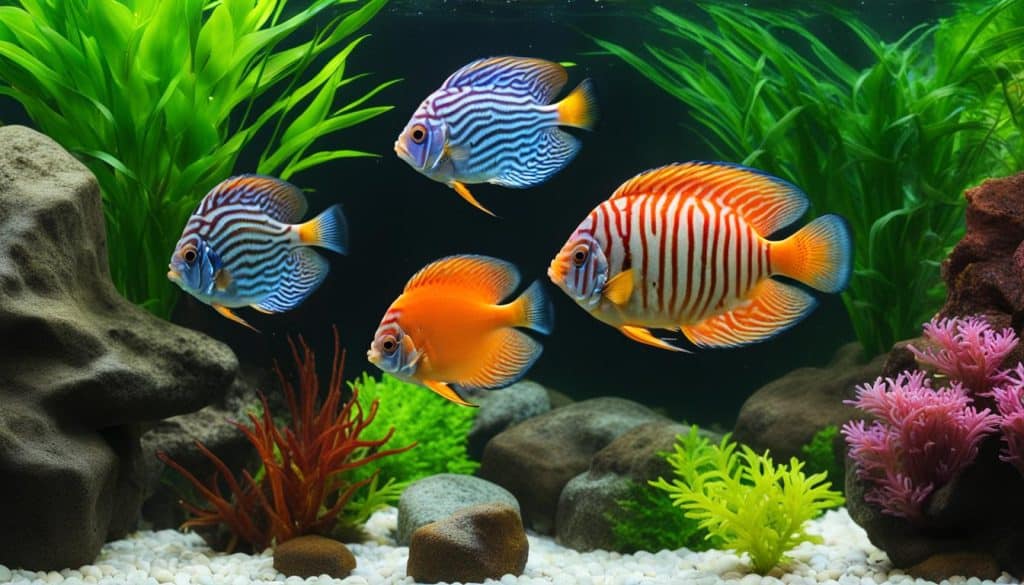
Discus fish require a spacious tank that is at least 50 gallons in size. The tank should have a rectangular shape, as discus fish are not comfortable in tall tanks. A rectangular tank allows them to swim horizontally and minimize stress.
You should also ensure that the tank is well-filtered to maintain proper water conditions. A canister filter is recommended, as it removes impurities effectively and provides a beneficial flow throughout the tank.
The tank substrate should be fine sand or gravel, as discus fish like to forage for food on the bottom of the tank. Additionally, you can add some driftwood, plants, and rocks to provide hiding places and create a natural environment for them.
Discus Fish Water Conditions
Discus fish are sensitive to water conditions, and it’s crucial to keep the water clean and stable. The ideal pH level for discus fish is between 6.0 and 7.0, and the water temperature should be maintained between 82°F and 86°F. A high-quality heater is essential to maintain a stable temperature, and a thermometer should be used to monitor the water temperature regularly.
The water should also be soft and free of any toxins like chlorine and heavy metals. A water conditioner should be used to remove these impurities and maintain the water quality.
Discus Fish Feeding
Discus fish are omnivores and require a balanced diet of protein and vegetables. High-quality dry and frozen foods can be provided and supplemented with live or frozen brine shrimp, bloodworms, and krill. Feeding should be done twice a day in small quantities to avoid overfeeding and water pollution.
Discus Fish Care and Maintenance
Discus fish require regular care and maintenance to thrive in a healthy environment. Water changes should be done weekly or bi-weekly to ensure the water quality remains optimal. Regular water testing should also be done to monitor the water conditions and prevent any sudden changes.
Discus fish are prone to diseases like ich and fin rot, and it’s crucial to monitor them regularly for any signs of illness. If you notice any symptoms, quarantine the affected fish and treat them immediately.
Understanding discus fish care and tank setup is essential to maintaining a healthy and thriving aquarium. For more information on the LA Pet Fair, reach out to us directly at (619) 281-PETS (7387), or apply to be one of our vendors at our next and upcoming show: http://5k8.f16.mywebsitetransfer.com/vendorlist.
Exploring the Different Types of Discus Fish
Discus fish are known for their vibrant and eye-catching colors, making them a popular addition to any aquarium. There are several types of discus fish, each with its unique pattern, coloration, and traits.
Blue Discus Fish
The blue discus fish is one of the most sought-after types of discus fish. It has a beautiful blue color with a hint of green, resembling the color of the ocean. Blue discus fish are peaceful and get along well with other fish species, making them an ideal addition to a community tank.
Red Discus Fish
The red discus fish is another popular type, known for its striking red coloration. They are slightly less tolerant of water conditions and require specific pH levels to thrive. Red discus fish are also more aggressive towards other fish and prefer to be kept in a species-only tank.
Green Discus Fish
Green discus fish, also known as the Heckel discus, have a unique pattern of green stripes on their body. They require a larger tank and prefer softer water with a lower pH level. Green discus fish are relatively peaceful and can coexist with other non-aggressive fish species.
Yellow Discus Fish
The yellow discus fish has a vibrant yellow coloration, making it stand out in any aquarium. They require a well-maintained tank with stable water conditions to thrive. Yellow discus fish are peaceful and can be kept with other non-aggressive fish species.
If you’re looking to add a touch of color and personality to your aquarium, consider one of these beautiful discus fish types. With their unique traits, they are sure to add a stunning visual element to your underwater world.

For more information on the LA Pet Fair, you can reach out to us directly at (619) 281-PETS (7387). You can also apply to be one of our vendors at our next and upcoming show: http://5k8.f16.mywebsitetransfer.com/vendorlist.
Breeding and Feeding Discus Fish
Discus fish are beautiful creatures that require specific care and attention when it comes to breeding and feeding. In this section, we will provide you with valuable insights on how to ensure successful breeding and proper nutrition for your discus fish.
Breeding Discus Fish
Breeding discus fish can be a challenging task, but it is also a very rewarding experience. To ensure successful breeding, it is important to create a suitable breeding environment. This involves selecting a breeding pair, providing them with an appropriate tank, and maintaining ideal water conditions.
When selecting a breeding pair, it is important to choose discus fish that are healthy, active, and of breeding age. Once you have selected your pair, you should place them in a separate breeding tank that has the appropriate dimensions. The breeding tank should be at least 20 gallons and have a temperature between 82-86°F.
To encourage breeding, you should provide your discus fish with a nutritious diet that includes live or frozen food such as brine shrimp, bloodworms, and daphnia. You should also monitor their behavior closely and ensure that they are spawning successfully.
Overall, breeding discus fish requires patience and dedication. With the proper care and attention, you can create a thriving discus fish breeding environment that will yield beautiful and healthy offspring.
Feeding Discus Fish
Proper nutrition is essential for the health and well-being of your discus fish. It is important to provide them with a well-balanced diet that meets their nutritional needs.
Discus fish are omnivorous and require a mixture of both plant and animal-based foods. You should include a variety of foods in their diet, including pellets, flakes, and frozen or live foods. Examples of suitable live or frozen foods include brine shrimp, bloodworms, and daphnia.
It is important to avoid overfeeding your discus fish as this can lead to health problems such as obesity and poor water quality. You should feed them small portions several times a day instead of one large meal.
In addition to providing a balanced diet, it is important to ensure that your discus fish have access to clean and well-maintained water. This will help to maintain their overall health and prevent illnesses.
For more information on discus fish breeding and feeding, please contact us at (619) 281-PETS (7387). You can also learn more about discus fish care and purchase supplies at the LA Pet Fair, where we offer a variety of vendors specializing in aquatic life. Apply to become a vendor at our upcoming show at http://5k8.f16.mywebsitetransfer.com/vendorlist.
Discus Fish Price, Diseases, and Compatibility
When considering purchasing discus fish, it’s essential to understand the factors that may influence their price range. Depending on the breed, size, and coloration, discus fish prices can vary from $30 to $200 per fish. Additionally, purchasing discus fish from a reputable breeder or pet store can ensure the health and quality of your fish, but may come at a higher cost.
One of the most common diseases that may affect discus fish is called “hole-in-the-head disease.” This illness is caused by poor water quality and a lack of essential vitamins and minerals in the fish’s diet. To prevent hole-in-the-head disease, it’s crucial to maintain clean water conditions and provide a varied and nutritious diet. Other illnesses that may affect discus fish include fin rot, gill disease, and bacterial infections.
It’s important to consider the compatibility of discus fish with other species in your aquarium. Discus fish are peaceful by nature and prefer to live in a calm and harmonious environment. They do well with other peaceful species such as tetras and corydoras catfish. Avoid keeping them with aggressive or territorial fish, as it can cause stress and harm to your discus fish.
LA Pet Fair
For more information on discus fish or the LA Pet Fair, feel free to reach out to us directly at (619) 281-PETS (7387). Additionally, if you’re interested in becoming a vendor at our upcoming show, apply now at http://5k8.f16.mywebsitetransfer.com/vendorlist.
FAQ
What are the ideal water conditions for discus fish?
Discus fish thrive in soft, slightly acidic water with a pH range of 6.0-7.0. The temperature should be maintained between 82-86°F (28-30°C). Regular water changes and the use of a high-quality water conditioner are essential for their well-being.
How big should the tank be for discus fish?
Discus fish require a spacious tank to swim and thrive. A minimum tank size of 55 gallons is recommended for a small group of discus fish. However, a larger tank, such as a 75-gallon or 100-gallon tank, is preferable to provide ample swimming space and maintain water stability.
What equipment is necessary for a discus fish aquarium?
To set up a discus fish aquarium, you will need a reliable filtration system, a heater to maintain the desired temperature, a thermometer to monitor water temperature, and a high-quality aquarium light. Additionally, a soft substrate, live plants, and hiding spots such as driftwood or rocks are beneficial for the well-being of discus fish.
What are the different types of discus fish?
Discus fish come in various types, including the Red Melon, Pigeon Blood, Leopard, and Blue Diamond. Each type features unique color patterns and characteristics, allowing enthusiasts to create captivating displays in their aquariums.
How can I successfully breed discus fish?
Breeding discus fish requires specific conditions and careful monitoring. Maintain stable water parameters, provide appropriate breeding infrastructure such as specially designed breeding cones or flat surfaces, and ensure a well-balanced diet. Patience and observation are key as discus fish develop their breeding behaviors and form pairs.
What do discus fish eat?
Discus fish are omnivores and require a varied diet for optimal health. Offer them a combination of high-quality flake or pellet food formulated for discus fish, as well as frozen or live foods such as bloodworms, brine shrimp, and daphnia. It is important to provide a balanced diet with essential nutrients to support their growth and vibrant colors.
Why do discus fish vary in price?
The price of discus fish can vary depending on factors such as their coloration, pattern, size, and rarity. Discus fish with unique and vibrant colorations tend to be more expensive. Additionally, fish bred from reputable breeders and those with desirable genetic attributes may command higher prices.
What are common diseases that can affect discus fish?
Discus fish are susceptible to various diseases, including bacterial and parasitic infections. Common diseases that can affect them include hole-in-the-head disease, skin flukes, and bacterial infections like fin rot. Regular observation, maintaining optimal water conditions, and providing a balanced diet can help prevent and minimize the risk of diseases.
Can discus fish be kept with other fish species?
While discus fish can coexist with other fish species, it is essential to choose compatible tank mates. Avoid aggressive or fin-nipping species that may stress or harm discus fish. Suitable tank mates include peaceful and non-aggressive fish species such as tetras, rasboras, and dwarf cichlids. Observing their compatibility and ensuring sufficient space and hiding spots is crucial for a harmonious tank environment.