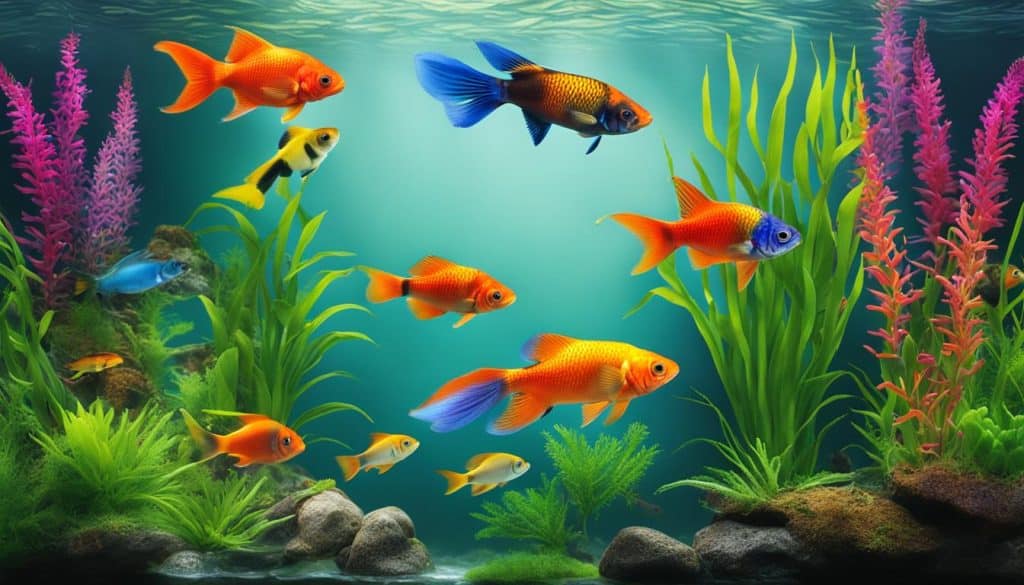
Welcome to our guide on Killi Fish– the captivating tropical freshwater fish that can add a touch of enchantment to any aquarium. Killifish are known for their vibrant colors and unique behaviors, making them a popular choice among aquarium enthusiasts. In this section, we’ll introduce you to the world of Killi Fish and delve into the different breeds of killifish, their care, and maintenance.
From their bright hues to their interesting behaviors, Killi Fish are a fascinating addition to any aquarium. Native to South America, Asia, and Africa, these tropical freshwater fish thrive in warm water environments. Furthermore, they come in different breeds, each with their unique features and maintenance requirements.
Whether you’re a seasoned aquarium enthusiast or a beginner, our guide will provide you with comprehensive information on Killi Fish care. We’ll cover topics ranging from creating the ideal tank setup to breeding and maintaining optimal health.
Key Takeaways:
- Killi Fish are tropical freshwater fish known for their vibrant colors and unique behaviors.
- These fish come in different breeds, each with their maintenance requirements.
- Our guide will provide you with comprehensive information on their care and maintenance.
- We’ll cover topics ranging from creating the ideal tank setup to breeding and maintaining optimal health.
- For more information on the LA Pet Fair, contact us directly or visit our website.
Stay tuned for our next section where we explore the enchanting colors of Killi Fish.
Exploring the Enchanting Colors of Killi Fish
Killi Fish are known for their vibrant and mesmerizing colors, making them a popular choice among aquarium enthusiasts.
At LA Pet Fair, we want to provide you with a comprehensive killifish care guide, including highlighting some of the top killi fish species known for their striking hues.
Top Killi Fish Species and Their Vibrant Colors
| Killi Fish Species | Color |
|---|---|
| Laimosemion xiphidius | Blue, Green, and Red |
| Fundulopanchax gardneri | Yellow, Orange, and Blue |
| Aphyosemion australe | Red, Yellow, and Blue |
These are just a few examples of killifish breeds that display stunning colors. It’s important to note that the colors of these fish can vary depending on their environment and breeding conditions.
Caring for Your Killi Fish
Proper care is crucial for maintaining the vibrant colors of your killifish. Here are some care tips:
- Keep your aquarium water clean and well-maintained.
- Provide a balanced and nutritious diet for your killifish. Some of the best foods for these freshwater fish include live or frozen foods like bloodworms and brine shrimp.
- Ensure that your killifish have an adequate amount of space to swim and explore to reduce stress and promote healthy growth.
By following these tips and maintaining an optimal tank setup, you can ensure that your killi fish continue to display their enchanting colors for years to come.

At LA Pet Fair, we’re passionate about all things aquarium-related. If you want more information on our upcoming shows or want to apply as a vendor, check out our website at http://5k8.f16.mywebsitetransfer.com/vendorlist or reach out to us directly at (619) 281-PETS (7387).
Unraveling the Unique Behaviors of Killi Fish
Killi Fish are not only visually captivating but also exhibit fascinating behaviors that make them stand out in the aquarium world. At LA Pet Fair, we’ve had the pleasure of observing these unique fish in action and are excited to share our insights with you in this Killifish care guide.
Why Are Killi Fish Unique?
Killi Fish have a reputation for being jumpers. They are also known for their unique breeding behavior and can adapt to different environments, making them an ideal choice for beginner and experienced hobbyists alike.
What Behaviors Do Killi Fish Exhibit?
Killi Fish are active swimmers and enjoy exploring their environment. They are known for their playful behavior, including chasing and nipping at each other. Males often establish territories and display colorful fins to attract females. When attracting a mate, males perform an elaborate dance, leading the female to their chosen spot for spawning.
Another interesting behavior of Killi Fish is their ability to enter a state of suspended animation, also known as diapause. This allows them to survive during droughts by burying themselves in mud until the water returns.
How to Create an Ideal Tank Setup for Killi Fish
Creating a suitable environment for Killi Fish requires replicating their natural habitat. Providing dense vegetation, rocks, and driftwood in the tank to create hiding spots can help reduce stress and encourage natural behavior. It’s essential to maintain a suitable water temperature and ensure the water is adequately filtered and oxygenated. Keep the water parameters consistent, and avoid overcrowding the tank, which can lead to aggressive behavior.
The above table highlights the top Killi Fish species and their unique behaviors.
Breeding Killi Fish: A Delicate Process
Breeding Killi Fish can be a rewarding experience for aquarium enthusiasts. However, it requires careful planning and attention to detail. In this section of our Killifish Care Guide, we’ll provide you with a step-by-step guide on how to breed Killi Fish successfully.
Selecting Compatible Pairs
The first step in breeding Killi Fish is selecting compatible pairs. You’ll need to ensure that you have both a male and a female Killi Fish of the same species and that they are healthy and disease-free. It’s also best to choose fish that are about six months old as they are more mature and better suited for reproduction.
Creating the Ideal Breeding Tank Setup
Once you’ve selected your compatible pairs, you’ll need to create an ideal breeding tank setup. The breeding tank should be at least 10 gallons in size and filled with soft, slightly acidic water. It’s also essential to provide a spawning substrate, such as Java moss or a spawning mop, for the Killi Fish to lay their eggs.
Providing Optimal Conditions for Successful Reproduction
Providing optimal conditions for Killi Fish reproduction involves maintaining the ideal temperature and pH level of the water. The water temperature should be between 72-75°F, and the pH should be slightly acidic, between 6.0-6.8.
The Breeding Process
During the breeding process, the male Killi Fish will entice the female with their vibrant colors and unique behaviors. Once the female is receptive, the male will guide her to the spawning substrate where she will lay her eggs. The male will then fertilize the eggs.
Raising Fry and Ensuring Their Survival
After spawning, you’ll need to remove the adult Killi Fish from the breeding tank to prevent them from eating the eggs. The eggs will hatch in about 10-14 days, and you’ll need to provide fry food for the baby fish to eat. It’s also essential to maintain the water quality to ensure the survival of the fry.
“Breeding Killi Fish can be a delicate process that requires patience and attention to detail. However, with the right setup and conditions, you can successfully breed these captivating fish and enjoy the rewards of watching them grow.”
Our comprehensive guide to breeding Killi Fish concludes here. We hope you’ve found it helpful and informative. If you have any further questions or concerns, please don’t hesitate to reach out to us directly at (619) 281-PETS (7387). You can also apply to be one of our vendors at our next and upcoming show here.
Maintaining Optimal Health: Killi Fish Care Tips
Proper care and maintenance are vital to ensure the health and well-being of your killi fish. Here are some essential care tips to keep in mind:
Water Parameters
Killi Fish are sensitive to water conditions, and it’s essential to maintain appropriate levels of pH, temperature, and hardness. The ideal pH range for killifish is between 6.0 and 7.5, and the temperature should be kept between 68°F and 78°F. Hardness levels should be between 5 and 12 dGH.
Tank Maintenance
Regular tank maintenance is crucial to ensure optimal health for your killi fish. Perform a 25% water change every week, and ensure the filtration system is working correctly. Remove any uneaten food and debris from the tank, and perform a thorough cleaning every month.
Best Food for Killifish
Killi Fish are carnivorous and require a protein-rich diet. Provide a varied diet of high-quality flakes, pellets, frozen or live foods such as brine shrimp, bloodworms, and daphnia. Avoid overfeeding, as it can lead to several health issues.
Common Health Issues
Common health issues that affect killi fish include parasitic infections, bacterial infections, and fungi. Symptoms include lethargy, lack of appetite, discoloration, and frayed fins. Regular water changes and proper tank maintenance can prevent many health issues. If you suspect your killi fish is suffering from any health problems, consult with a veterinarian with experience in fish care.
“We’re committed to helping pet owners provide the best care for their pets. For more information on the LA Pet Fair, you can reach out to us directly at (619) 281-PETS (7387). You can also apply to be one of our vendors at our next and upcoming show: http://5k8.f16.mywebsitetransfer.com/vendorlist.”
Conclusion
In conclusion, we hope that our guide has provided you with a comprehensive understanding of Killi Fish and how to care for them. These tropical freshwater fish are a fascinating addition to any aquarium, with their vibrant colors and unique behaviors. By following our Killifish care guide, you can create an optimal tank setup, select the best killifish breeds, and maintain the ideal conditions for breeding and raising fry.
Remember to monitor and maintain water parameters, conduct regular tank maintenance, and provide a balanced diet of the best food for killifish. With proper care and attention, your Killi Fish will thrive and add a touch of enchantment to your aquarium.
For more information on the LA Pet Fair, please feel free to reach out to us directly at (619) 281-PETS (7387). If you’re interested in becoming a vendor at our next and upcoming show, head to our website to apply: http://5k8.f16.mywebsitetransfer.com/vendorlist.
FAQ
What are killi fish?
Killi Fish are tropical freshwater fish known for their vibrant colors and unique behaviors. They are a popular addition to aquariums and can bring a touch of enchantment to any tank.
What are the different breeds of killifish?
There are numerous breeds of killifish, each known for their distinct characteristics and colors. Some popular killi fish breeds include Aphyosemion, Fundulopanchax, and Nothobranchius.
How do I care for killi fish?
To care for killi fish, it’s essential to maintain optimal water parameters, provide a suitable tank setup, and offer a balanced diet. Regular tank maintenance and monitoring for any health issues are also crucial for their well-being.
Can killi fish be bred in a home aquarium?
Yes, killi fish can be bred in a home aquarium. However, it requires careful planning and attention to detail. Selecting compatible pairs, providing the right environmental conditions, and raising fry are key factors in successful breeding.
What are some common health issues for killi fish?
Killi fish can be susceptible to various health issues, including fungal infections, bacterial diseases, and parasitic infestations. It’s important to maintain optimal water conditions, provide a balanced diet, and promptly address any signs of illness.
Where can I find more information about LA Pet Fair?
For more information about LA Pet Fair, you can reach out to us directly at (619) 281-PETS (7387). If you’re interested in becoming a vendor at our next show, you can apply on our website: http://5k8.f16.mywebsitetransfer.com/vendorlist.