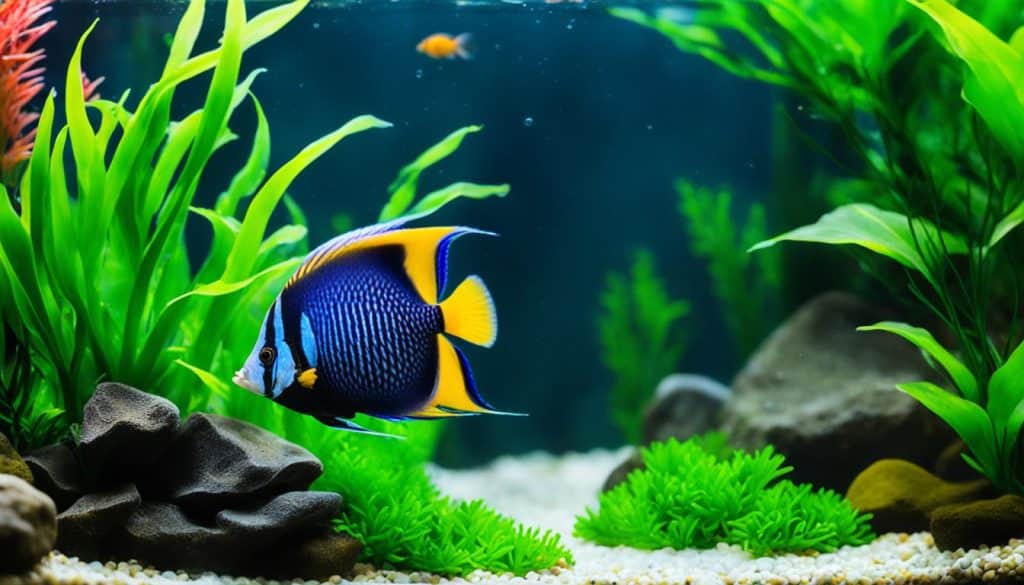
Welcome to our comprehensive guide on angelfish care. Whether you’re a beginner or an experienced aquarist, we are here to provide you with all the information you need to ensure the health and well-being of your angelfish in your aquarium. From selecting the right tank mates to maintaining a nutritious diet, we’ve got you covered. Let’s dive in!
Did you know that angelfish are one of the most beautiful and popular freshwater fish species? Their graceful appearance and vibrant colors make them a favorite among hobbyists. However, angelfish care goes beyond just their aesthetics. It involves creating a suitable environment that mimics their natural habitat and providing proper nutrition to promote optimal growth and longevity.
Key Takeaways
- Understanding and meeting the unique needs of angelfish is essential for their well-being in your aquarium.
- Choosing compatible tank mates is crucial to create a harmonious community tank.
- There are various types of angelfish, each with its own characteristics and appearance.
- A balanced and nutritious diet is essential for the health and growth of your angelfish.
- For those interested in breeding angelfish, we’ll provide step-by-step guidance.
Join us for our upcoming Pet Show on June 29-30, 2024, in Pomona, California. Don’t miss the chance to have an amazing weekend of fun while gaining further insights into angelfish care and meeting fellow enthusiasts. Grab your tickets now – All Access Weekend Pass: $20 for adults, $16 for kids (12 & under), and 2 & under go free. We can’t wait to see you there!
Choosing the Right Tank Mates
When setting up your angelfish tank, choosing the right tank mates is crucial for creating a harmonious and thriving community. There are certain types of fish that can coexist peacefully with angelfish, while others may cause conflicts or stress. To ensure compatibility, it’s important to consider factors like size, temperament, and water requirements when selecting tank mates.
Angelfish, known for their elegant fins and graceful swimming, make great additions to community tanks. They can coexist with a variety of peaceful fish species that share similar water parameters. Some popular options for angelfish tank mates include:
- Cardinal Tetras: These stunning schooling fish with their vibrant red and blue hues are a perfect match for angelfish. They prefer similar water conditions and will create a visually captivating display in your tank.
- Corydoras Catfish: These bottom-dwelling fish add a touch of charm to your tank while also helping to keep the substrate clean. With their peaceful nature, they won’t pose a threat to angelfish.
- Dwarf Gouramis: These small, colorful fish are excellent companions for angelfish. They have a calm temperament and complement the angelfish’s beauty with their vibrant shades.
- Harlequin Rasboras: These lively and peaceful fish are the perfect tank mates for angelfish. They are highly adaptable and will create a lively dynamic in your tank.
While the above examples are generally compatible with angelfish, it’s important to remember that individual fish may have unique personalities. Always monitor the behavior of your tank mates closely and be prepared to make adjustments if necessary.
Creating a well-balanced community tank not only ensures the happiness and well-being of your angelfish but also enhances the overall visual appeal of your aquarium. By choosing tank mates that peacefully coexist with angelfish, you can create a harmonious underwater ecosystem that showcases the beautiful diversity of freshwater fish.
Grab your tickets now for our upcoming Pet Show June 29-30, 2024 in Pomona, California. All Access Weekend Pass: $20 Adults – $16 Kids (12 & Under) – 2 & Under Free. We look forward to seeing you for an amazing weekend of fun!
Understanding Angelfish Types
Angelfish are captivating creatures that come in various types, each with its own unique characteristics and appearance. Whether you’re a beginner or an experienced aquarist, it’s important to understand the different types of angelfish available, as this knowledge will help you make an informed decision when selecting your fish.
Let’s explore some of the most popular angelfish types:
- Pterophyllum Scalare: Also known as the Common Angelfish, this variety is the original wild type. It has a triangular body shape and vertical black stripes on a silver or gold base color.
- Pterophyllum Altum: Also known as the Altum Angelfish, this type is highly sought after by enthusiasts. It features a more elongated body, tall dorsal and anal fins, and a silver or gold base color.
- Pterophyllum Leopoldi: Also known as the Leopold’s Angelfish, this variety is distinct with its black body covered in white or iridescent white spots. Its unique appearance makes it a favorite among aquarists.
- Veil Angelfish: This type of angelfish has long, flowing fins that cascade beautifully. Veil angelfish come in a variety of colors, including black, silver, and gold, adding elegance to any aquarium.
These are just a few examples of the many angelfish types available in the hobby. Each type has its own beauty and charm, so take your time to explore and choose the ones that resonate with you.

Remember, before purchasing angelfish, consider their compatibility with other fish in your aquarium. Some types may be more aggressive or territorial, while others are more peaceful and sociable. It’s essential to create a harmonious community tank to ensure the well-being of all your aquatic friends.
Now that you have a better understanding of angelfish types, you can confidently select the perfect fish for your aquarium. Stay tuned for the next section, where we’ll dive into the importance of maintaining a healthy diet for your angelfish.
Grab your tickets now for our upcoming Pet Show on June 29-30, 2024, in Pomona, California. All Access Weekend Pass: $20 Adults – $16 Kids (12 & Under) – 2 & Under Free. We look forward to seeing you for an amazing weekend of fun!
Maintaining a Healthy Diet
A balanced and nutritious diet is crucial for the well-being of your angelfish. Providing them with the right food will not only support their overall health but also promote optimal growth and vibrant colors. In this section, we’ll delve into the dietary needs of angelfish and provide you with valuable tips and recommendations on feeding to ensure their well-being.
The Importance of a Varied Diet
Angelfish are omnivores, meaning they require a combination of both plant-based and protein-rich foods in their diet. Offering a variety of food types will allow them to receive the necessary nutrients for their specific dietary requirements. A diverse diet also enhances their natural behaviors and helps prevent common health issues that may arise from a monotonous diet.
Plant-Based Foods
Include high-quality plant-based foods in your angelfish’s diet to provide them with essential vitamins and minerals. Options include:
- Vegetables: Offer blanched spinach, lettuce, and peas as a source of fiber and essential nutrients.
- Spirulina: This blue-green algae is a rich source of protein, vitamins, and minerals. Consider feeding spirulina-based flakes or pellets to supplement their diet.
- Algae: Angelfish enjoy consuming fresh algae or algae wafers. This natural food source also aids in their digestion.
Protein-Rich Foods
To meet their protein requirements, consider the following options:
- Live Foods: Offer live or frozen foods such as brine shrimp, daphnia, and bloodworms. These protein-rich treats mimic their natural diet and promote optimal growth.
- Pellets and Flakes: Choose high-quality angelfish-specific pellets or flakes that contain a balanced mix of proteins and other essential nutrients.
- Frozen Foods: Supplement their diet with frozen foods like mysis shrimp or krill.
Remember to provide an appropriate portion size that your angelfish can consume within a few minutes, avoiding overfeeding. A general rule of thumb is to feed them two to three times a day, ensuring they can eat everything offered without any leftovers.
By offering a diverse diet of plant-based and protein-rich foods, you’ll be well on your way to maintaining the health and vitality of your angelfish.
Grab your tickets now for our upcoming Pet Show on June 29-30, 2024, in Pomona, California. All Access Weekend Pass: $20 Adults – $16 Kids (12 & Under) – 2 & Under Free. We look forward to seeing you for an amazing weekend of fun!
Breeding Angelfish
If you’re passionate about angelfish and want to take your hobby to the next level, breeding angelfish can be an exciting and rewarding experience. By creating the ideal breeding environment and providing proper care, you can witness the magical process of angelfish reproduction and raise a new generation of these beautiful fish.
First, let’s talk about setting up the breeding tank. It should be spacious enough to accommodate a pair of angelfish, with plenty of hiding spots for them to spawn. Adding live plants like java moss or broadleaf plants can provide additional hiding places and create a natural environment.
Next, ensure the water conditions are suitable for breeding. Angelfish prefer slightly acidic to neutral pH levels, around 6.5 to 7. Ideally, the temperature should be around 78-82°F (25-28°C), and regular water changes are crucial for maintaining pristine water quality.
When selecting a breeding pair, look for fish with complementary characteristics. They should be healthy, mature, and ideally, one male and one female. Male angelfish often have a more pointed dorsal fin, while females tend to have rounder bellies.
Once you have a compatible pair, introduce them to the breeding tank. It might take some time for them to establish their territory and get comfortable. During this period, provide them with a balanced diet of high-quality flake or pellet food, supplemented with frozen or live foods like brine shrimp or bloodworms.
When the bonding process is complete, the male and female will begin the courtship ritual, which involves swimming together, cleaning potential spawning sites, and even engaging in a courtship dance. Eventually, the female will lay adhesive eggs on a cleaned vertical surface, such as a broadleaf plant or a slate tile.
After spawning, the adult angelfish may eat some of the eggs, but don’t worry – this is a natural behavior. To increase the chances of survival, you can remove the eggs and place them in a separate tank with similar water parameters.
Once the eggs hatch, the fry will initially feed on their yolk sacs. As they grow, you can start feeding them newly hatched brine shrimp or commercially available fry food. Keep in mind that the first few weeks are critical for their development, so ensure their tank is clean and provide adequate nutrition.
Breeding angelfish requires patience and dedication, but the joy of seeing new life emerge is truly priceless. As you gain experience, you can experiment with different angelfish varieties and observe fascinating color patterns and fin shapes in the offspring.
So, if you’re ready to embark on this breeding adventure, take the necessary steps to create the ideal environment and provide optimal care for your angelfish. Witness the wonders of nature unfold before your eyes as you become a proud angelfish breeder.
Key Points:
- Choose a spacious breeding tank with hiding spots.
- Maintain water conditions of slightly acidic to neutral pH and appropriate temperature.
- Select a compatible breeding pair with complementary characteristics.
- Introduce the pair to the breeding tank and provide a balanced diet.
- Observe the courtship ritual and egg-laying process.
- Consider removing the eggs for better survival rates.
- Feed the fry with freshly hatched brine shrimp or commercially available fry food.
- Enjoy the joy of breeding and witnessing the development of the next generation.
Grab your tickets now for our upcoming Pet Show on June 29-30, 2024, in Pomona, California. All Access Weekend Pass: $20 Adults – $16 Kids (12 & Under) – 2 & Under Free. We look forward to seeing you for an amazing weekend of fun!
Preventing and Treating Angelfish Diseases
Like all fish, angelfish are susceptible to diseases. It’s important to be aware of the common angelfish diseases, their causes, and how to prevent and treat them to keep your angelfish healthy and thriving.
One of the most common diseases that angelfish can experience is Ich, also known as white spot disease. This parasitic infection causes small white spots to appear on the fish’s body and fins. To prevent Ich, maintain good water quality, and avoid introducing new fish that may carry the disease. If your angelfish does contract Ich, there are treatments available, such as medicated baths and medications that can be added to the water.
Fin rot is another common angelfish disease caused by bacterial infections. It typically starts with fraying or disintegrating fins and can progress to the body of the fish if left untreated. To prevent fin rot, ensure clean water conditions, proper filtration, and a balanced diet. If your angelfish shows signs of fin rot, it’s essential to isolate the affected fish to prevent the spread of the infection and treat it with appropriate antibiotics.
Salt treatment
Swim bladder disease is a condition that affects the fish’s ability to control its buoyancy. It can cause the fish to float or sink abnormally. Swim bladder disease can be caused by factors like overfeeding, poor water quality, or constipation. Maintaining a healthy diet, feeding small amounts multiple times a day, and providing a well-maintained aquarium can help prevent swim bladder disease.
Velvet disease is a parasitic infection that appears as a dusty or gold dust-like appearance on the skin of the fish. It can cause itching, scratching, and difficulty breathing for the affected angelfish. Proper quarantine procedures for new fish, regular water testing, and maintaining good water quality can help prevent velvet disease. If your angelfish does contract this disease, there are medications available to treat it.
By being proactive in preventing angelfish diseases and promptly treating any illnesses that do occur, you can ensure the overall well-being and vitality of your angelfish. Remember to provide them with a clean and stress-free environment, a balanced diet, and regular monitoring to catch any potential health issues early on.
Grab your tickets now for our upcoming Pet Show on June 29-30, 2024, in Pomona California. All Access Weekend Pass: $20 Adults – $16 Kids (12 & Under) – 2 & Under Free. We look forward to seeing you for an amazing weekend of fun!
Fascinating Angelfish Facts
Angelfish are not only beautiful, but they also have some fascinating characteristics that make them stand out in the world of aquarium fish. Let’s dive into some interesting angelfish facts that will deepen your understanding and appreciation of these captivating creatures.

1. Natural Habitat
Angelfish are native to the Amazon River basin in South America. They thrive in warm, tropical waters with dense vegetation. These natural habitats have shaped the behavior and physical characteristics of angelfish.
2. Colorful Varieties
Angelfish come in a wide range of colors and patterns, making them a favorite among aquarium enthusiasts. From the classic silver angelfish to the striking blue, black, and even albino varieties, there is a color option to suit every taste.
3. Unique Shape
One of the most distinctive features of angelfish is their triangular, disk-shaped bodies. This shape allows them to gracefully navigate through the water, making them excellent swimmers.
4. Pair Bonding
Angelfish are known to form strong pair bonds and display monogamous behavior. Once a pair is formed, they will often stay together for life, taking on joint parenting responsibilities.
5. Territorial Nature
Angelfish can be territorial and may display aggressive behavior towards other fish, especially during breeding or when defending their nesting sites. It’s important to provide them with enough space in the aquarium to reduce stress and aggression.
6. Tendency to Eat Plants
While angelfish are primarily omnivorous and require a mix of protein and plant-based foods in their diet, they have been known to nibble on aquarium plants. It’s essential to choose suitable plant species that can withstand their grazing tendencies.
- Angelfish are native to the Amazon River basin.
- They come in a wide range of colors and patterns.
- Angelfish have a unique triangular, disk-shaped body.
- They form strong pair bonds and exhibit monogamous behavior.
- Angelfish can be territorial and may display aggression towards other fish.
- They have a tendency to eat aquarium plants.
These are just a few of the many intriguing facts about angelfish. By understanding their natural habitat, unique behaviors, and specific care requirements, you can create a harmonious environment for these stunning aquatic creatures.
Want to learn more about angelfish care? Join us at our upcoming Pet Show on June 29-30, 2024 in Pomona, California. Grab your tickets now for an amazing weekend of fun!
Conclusion
We hope this guide has provided you with valuable insights into angelfish care. By following the tips and recommendations discussed here, you can create a thriving and healthy freshwater angelfish aquarium.
Don’t forget to grab your tickets for our upcoming Pet Show in Pomona, California on June 29-30, 2024, where you can explore more about angelfish care and have an amazing weekend of fun!
Join us at our Pet Show and discover a world of fascinating aquatic life. The event promises a variety of exhibits, interactive workshops, and expert advice. With an All Access Weekend Pass priced at $20 for Adults, $16 for Kids (12 & Under), and Free for 2 & Under, this is an opportunity to indulge in your passion and connect with fellow angelfish enthusiasts. We look forward to seeing you there!