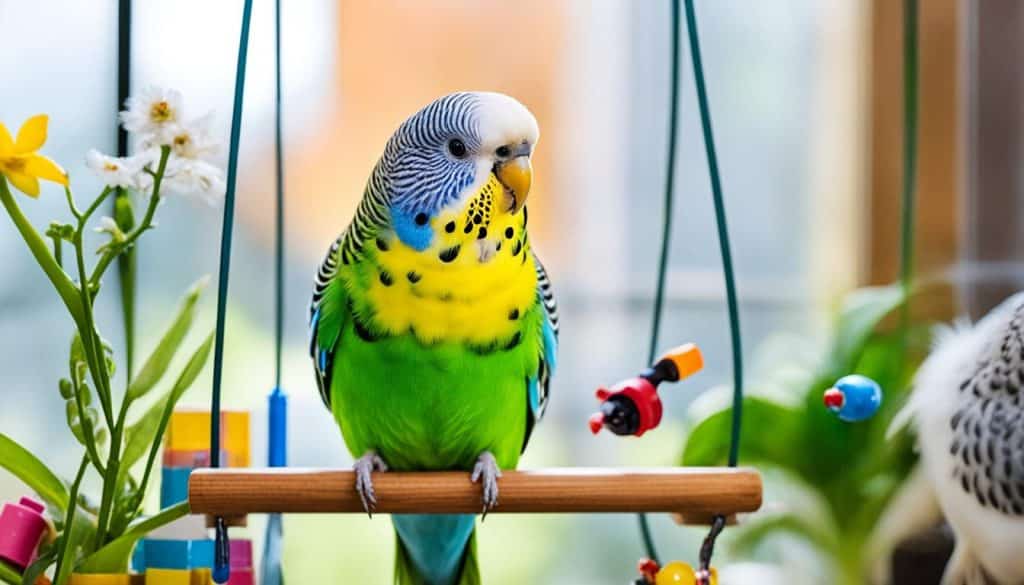
Welcome to our comprehensive guide on caring for your budgie, where we provide expert tips and advice from avian experts. In this section, we will cover important aspects of budgie care, including their diet, training, ideal cage setup, and stimulating toys for their well-being. Whether you’re a new budgie owner or looking to enhance your budgie’s living environment, we’ve got you covered.
When it comes to budgie care, it’s essential to prioritize their overall health and happiness. By following these expert tips, you can ensure that your feathered friend thrives in their environment.
Key Takeaways:
- Provide a balanced diet of seeds, pellets, and fresh fruits and vegetables for your budgie’s nutrition.
- Establish a feeding schedule and monitor portion sizes to prevent overeating.
- Build a strong bond with your budgie through effective training techniques such as taming and teaching tricks.
- Create a comfortable and stimulating environment in the budgie cage with proper size, perches, and accessories.
- Engage your budgie with a variety of toys to promote mental stimulation and prevent boredom.
For more information on budgie care, give us a call at 619-281-7387 or contact us online today. We look forward to helping you create a happy and healthy life for your budgie!
Best Food Options for Your Budgie
A healthy diet plays a vital role in ensuring the overall well-being of your budgie. Feeding them nutritious food is essential for maintaining their health and supporting their immune system. In this section, we will discuss the best food options for your feathered friend, emphasizing the importance of a balanced diet.
The diet of a budgie should consist of a variety of ingredients, including seeds, pellets, and fresh fruits and vegetables. Let’s take a closer look at each of these food groups:
- Seeds: Seeds are a staple in a budgie’s diet, providing essential nutrients and fatty acids. However, it’s important to note that a seed-only diet can result in deficiencies. Therefore, it’s recommended to provide a combination of seeds and other food options to ensure a well-rounded diet. Ideal seed options include millet, sunflower seeds, and safflower seeds.
- Pellets: Pellets offer a balanced mix of nutrients, vitamins, and minerals, making them an excellent addition to your budgie’s diet. They are designed to provide all the necessary nutrients that your budgie needs, promoting optimal health. Introducing pellets gradually into their diet can be beneficial. Ensure to choose high-quality pellets formulated specifically for budgies.
- Fresh Fruits and Vegetables: Adding fresh fruits and vegetables is a great way to provide additional vitamins and minerals to your budgie’s diet. Some suitable options include apples, carrots, broccoli, leafy greens, and bell peppers. Remember to wash them thoroughly and cut them into small, manageable pieces to avoid any choking hazards.
Feeding schedules and portion sizes are also important factors to consider when it comes to your budgie’s diet. Offering food in the morning and removing any uneaten portions in the evening can help establish a routine. It’s crucial to monitor their food intake and adjust portion sizes accordingly to prevent obesity or malnutrition.
Now that we’ve discussed the best food options for your budgie, let’s summarize the key points in the table below:
| Food Group | Examples |
|---|---|
| Seeds | Millet, sunflower seeds, safflower seeds |
| Pellets | High-quality budgie pellets |
| Fresh Fruits and Vegetables | Apples, carrots, broccoli, leafy greens, bell peppers |
Providing a balanced diet with a combination of seeds, pellets, and fresh fruits and vegetables will ensure that your budgie receives the necessary nutrients for a healthy and happy life. Remember to consult with an avian veterinarian for personalized dietary recommendations for your budgie.
Training Your Budgie: Building a Strong Bond
Building a strong bond with your budgie is essential for their happiness and mental stimulation. When you establish a trusting relationship with your feathered friend, not only will it enhance your interaction and enjoyment, but it will also encourage positive behavior and facilitate effective training.
One effective technique to start training your budgie is through taming. This process involves gradually gaining your budgie’s trust by spending time near their cage, speaking softly, and offering treats. As your budgie becomes more comfortable with your presence, you can progress to gently placing your hand near them and eventually training them to step onto your finger or hand.
Once your budgie is comfortable with handling, you can introduce trick training. This can include teaching them to perch on command, fly to a designated spot, or even perform simple acrobatics. With patience, consistency, and positive reinforcement in the form of treats or praise, your budgie can quickly learn and master new tricks.
Socializing your budgie is also crucial for their development and well-being. Budgies are highly social birds and thrive when they have companionship. Interacting with your budgie daily, talking to them, and gently stroking their feathers can help strengthen the bond between you. Additionally, providing ample time outside of their cage for supervised exploration and play will keep them engaged and happy.
Benefits of Budgie Training:
- Enhances the bond between you and your budgie
- Provides mental stimulation and prevents boredom
- Promotes positive behavior and reduces aggression
- Enables effective communication and understanding
- Allows for fun and interactive activities
Remember, training your budgie requires patience, consistency, and gentle handling. Avoid forceful techniques or punishments as they can cause fear and stress in your bird. Instead, focus on positive reinforcement and reward-based training methods. With time and dedication, you can build a strong bond with your budgie and enjoy the benefits of a well-trained and happy feathered companion.
| Training Tips | Key Takeaways |
|---|---|
| Start with taming techniques to build trust and familiarity. | Training enhances the bond between you and your budgie. |
| Gradually introduce trick training with positive reinforcement. | Positive reinforcement is key to effective budgie training. |
| Socialize your budgie through regular interaction and supervised playtime outside the cage. | Socialization prevents boredom and promotes a happy, well-adjusted budgie. |
Creating the Perfect Environment: Cage and Toys
Providing a comfortable and stimulating environment is crucial for your budgie’s well-being. In this section, we will discuss the ideal cage setup, including size, perches, and accessories. We will also explore the different types of toys that can keep your budgie entertained and mentally engaged.
The Perfect Budgie Cage
When it comes to choosing a cage for your budgie, size matters. Budgies are active birds that require space to fly and exercise. Ideally, go for a cage that is at least 18 inches wide, 18 inches deep, and 24 inches in height. Remember, the more space your budgie has, the happier and healthier they will be.
Ensure that the cage bars are spaced closely together to prevent your budgie from getting stuck or injured. Cages with horizontal bars are preferable as they provide more climbing opportunities for your budgie.
Be sure to place the cage in a well-lit area away from direct drafts and excessive noise. Budgies thrive in environments where they feel safe and secure.
Perches and Accessories
Inside the cage, provide multiple perches of varying thicknesses to exercise your budgie’s feet and prevent foot problems. Natural wooden perches are a good choice as they mimic the branches budgies would encounter in the wild.
In addition to perches, include essential accessories like a food dish, a water dispenser, and a cuttlebone to help maintain your budgie’s beak health. The cuttlebone also serves as a source of calcium.
Engaging Budgie Toys
Keeping your budgie mentally stimulated is just as important as providing a comfortable cage. Toys help prevent boredom and encourage healthy behaviors.
Choose a variety of budgie toys to cater to their natural instincts. Toys with bells, mirrors, swings, and ladders provide entertainment and maintain their curious nature.
Rotate and introduce new toys regularly to keep your budgie’s interest piqued. This will prevent them from losing enthusiasm for their toys and encourage exploration.
| Toy Type | Description |
|---|---|
| Mirror | Provides visual stimulation and companionship. |
| Bell | Encourages play and stimulates auditory senses. |
| Swing | Offers physical exercise and a place to relax. |
| Ladder | Provides climbing and perching opportunities. |
Remember to inspect the toys regularly for any signs of wear and tear. Remove any damaged or broken toys to prevent injury.
By creating a perfect environment with the right cage and toys, you can ensure your budgie leads a happy and fulfilling life.
Budgie Health: Maintaining a Happy and Disease-free Buddy
Ensuring the health and well-being of your budgie is crucial to their longevity and happiness. By taking proactive measures and providing proper care, you can keep your feathered friend in peak condition. One essential aspect of budgie health is maintaining a clean and hygienic environment. Regularly clean their cage, perches, and toys to prevent the buildup of bacteria and ensure a safe living space for your budgie.
Monitoring your budgie for signs of illness is another vital component of their overall health. Keep an eye out for symptoms such as changes in appetite, difficulty breathing, feather plucking, or unusual behavior. If you notice any of these signs, consult a veterinarian who specializes in avian care immediately. Early detection and prompt treatment can make a significant difference in your budgie’s recovery.
In addition to general health care, it’s important to schedule regular veterinary check-ups for your budgie. These examinations ensure that any potential health issues are detected early and addressed promptly. During these visits, the vet will conduct a thorough examination, provide necessary vaccinations, and offer guidance on nutrition and overall budgie care.
While budgie breeding can be a rewarding experience, it’s important to do thorough research and consult experts before embarking on this endeavor. Breeding budgies requires knowledge of their reproductive cycle, proper mating pairs, and the necessary nesting equipment. By understanding the intricacies of budgie breeding, you can ensure the health and well-being of both the parent birds and their offspring.