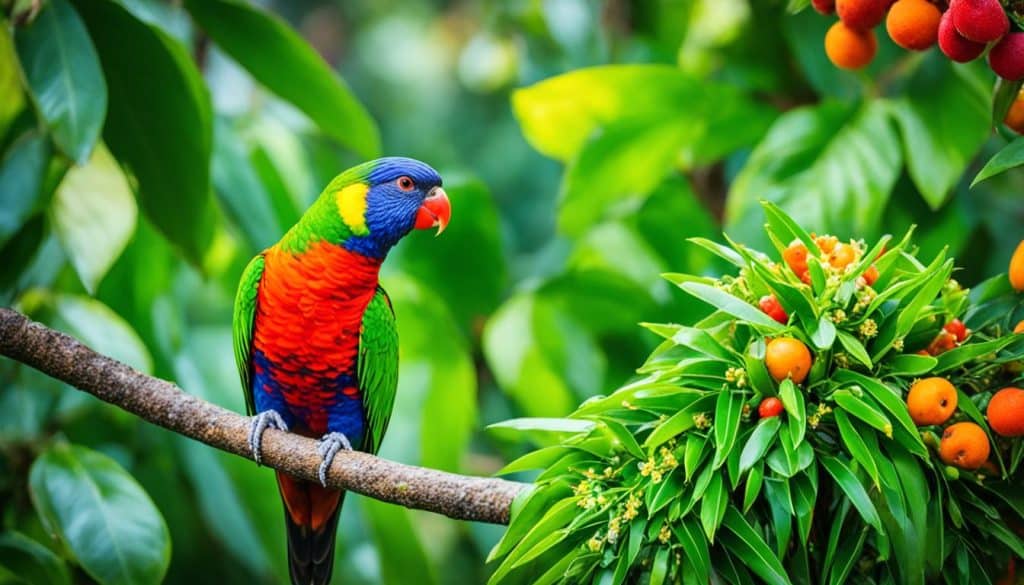
Welcome to our comprehensive guide on lorikeet care, where we provide essential tips for keeping these vibrant birds happy and healthy. Lorikeets are known for their striking colors and playful personalities, making them a popular choice among bird enthusiasts. In this guide, we’ll cover everything you need to know about their diet, care needs, and behavior, ensuring you have all the knowledge to provide the best possible care for your lorikeet.
Key Takeaways:
- Proper lorikeet care involves providing a balanced diet, regular socialization, and a stimulating environment.
- Lorikeets require a specialized diet consisting of nectar, fruits, vegetables, and supplements to meet their nutritional needs.
- Understanding lorikeet behavior and social hierarchy is crucial for ensuring their mental and emotional well-being.
- Training and enrichment activities enhance the bond between lorikeet and owner and promote mental stimulation.
- Regular grooming, appropriate housing, and monitoring for potential health concerns are essential for their overall health and longevity.
If you’re ready to dive into the world of lorikeet care, join us in the upcoming sections where we’ll explore their species, diet, behavior, training, and overall health maintenance. Remember, it’s essential to provide the right care and attention to keep these magnificent birds thriving. Let’s get started!
Lorikeet Species and Habitat
Lorikeets are a diverse group of birds, comprising various species that exhibit unique characteristics and preferences when it comes to their natural habitat. Understanding their specific needs is crucial for creating a suitable environment for these captivating birds in captivity.
1. Lorikeet Species
There are several lorikeet species found across different regions, each with its own distinct features and colors. Some common lorikeet species include:
- Rainbow Lorikeet (Trichoglossus moluccanus)
- Scaly-breasted Lorikeet (Trichoglossus chlorolepidotus)
- Red Lory (Eos bornea)
- Black-capped Lory (Lorius lory)
- Weber’s Lorikeet (Trichoglossus weberi)
Each species has its own unique set of characteristics, ranging from vibrant colorful plumage to specific vocalizations and behaviors.
2. Lorikeet Habitat
Lorikeets are native to various habitats, including rainforests, woodlands, and coastal regions. They are typically found in tropical and subtropical areas of Australia, Indonesia, Papua New Guinea, and the surrounding islands. These birds are well-adapted to their natural environments and have specific requirements for their captive habitats.
To recreate a suitable habitat for lorikeets in captivity, it’s important to consider the following factors:
| Factors | Description |
|---|---|
| Enclosure size | The enclosure should provide ample space for the lorikeet to move around, stretch its wings, and engage in natural behaviors. A larger enclosure is preferable for active species like Rainbow Lorikeets. |
| Plant life | Adding live plants, such as flowering shrubs or small fruit trees, can create a more natural environment. These plants can also serve as a food source and provide enrichment for the lorikeets. |
| Nesting options | Lorikeets appreciate nest boxes or hollow logs where they can roost and breed. Providing these options mimics their natural nesting behavior. |
| Perches and toys | A variety of perches and toys should be provided to keep the lorikeets mentally stimulated and physically active. This can include branches, ropes, swings, and puzzle toys. |
| Nectar feeders | Lorikeets have a high preference for nectar-rich foods. Placing nectar feeders in their habitat will ensure they receive their required dietary needs. |
Creating a habitat that closely resembles their natural environment is essential for the well-being and happiness of lorikeets in captivity. By understanding their species-specific requirements and emulating their natural habitat, you can provide a comfortable and enriching environment for these magnificent birds.
Lorikeet Diet and Feeding Requirements
When it comes to keeping lorikeets healthy and thriving, a well-balanced diet is of utmost importance. These colorful birds have specific feeding requirements that must be met to ensure optimal health and vitality.
Lorikeets are nectarivorous birds, meaning they primarily feed on nectar. However, a diverse diet consisting of other food sources is also essential to provide them with the necessary nutrients.
Diet Composition
A lorikeet’s diet should include:
- Nectar
- Fruits
- Vegetables
- Supplements
Nectar serves as the foundation of a lorikeet’s diet, providing carbohydrates for energy. Commercially available lorikeet nectar mixes can be purchased, or you can prepare homemade nectar by mixing water, pure honey, and a specialized lorikeet nectar powder. It’s crucial to follow the recommended proportions and instructions provided.
In addition to nectar, lorikeets require a variety of fresh fruits and vegetables to meet their nutritional needs. Offer a wide range of options, including apples, bananas, grapes, kale, spinach, carrots, and broccoli. These colorful and flavorful additions not only provide essential vitamins and minerals but also offer enrichment and stimulation for the birds.
Supplements such as calcium and vitamin D3 are also crucial to support a lorikeet’s overall health. These can be obtained in the form of avian supplements specifically designed for lorikeets.
Feeding Recommendations
When it comes to feeding lorikeets, several factors need consideration:
- Meal Frequency: Lorikeets require frequent small meals throughout the day. Aim for 4-6 feedings, with a gap of 2-3 hours between each meal. This feeding pattern mimics their natural foraging behavior and ensures optimal nutrient absorption.
- Portion Sizes: Provide appropriate portion sizes based on your lorikeet’s size and activity level. Avoid overfeeding, as this can result in obesity and associated health issues.
- Presentation: Offer nectar in shallow dishes or specialized feeding bottles designed for lorikeets. Fruits and vegetables should be sliced or diced into manageable pieces. Consider presenting them on skewers or placing them in puzzle toys to encourage foraging behavior.
It’s important to monitor your lorikeet’s food intake and adjust as needed. Regularly observe their weight, feather condition, and droppings to ensure they are receiving the proper nutrition. Consulting with an avian veterinarian can provide valuable guidance on specific dietary needs and any necessary adjustments.
Providing a well-rounded diet is vital to promote the overall health and longevity of your lorikeet. By offering an array of nectar, fruits, vegetables, and supplements, as well as adhering to appropriate meal frequencies and portion sizes, you can ensure that your lorikeet thrives both physically and mentally.
Lorikeet Behavior and Socialization
Understanding the behavior and socialization of lorikeets is essential for creating a harmonious and enriching environment for these vibrant birds. By learning about their natural instincts and social hierarchy, we can provide the necessary stimulation and companionship for their well-being.
Lorikeets are highly social creatures that thrive on interaction with others, be it fellow birds or humans. They possess a strong sense of community and enjoy the company of their flock. In the wild, lorikeets form tight-knit groups and engage in various activities together, such as foraging for food and preening.
When it comes to human interaction, lorikeets can form deep bonds with their caregivers. They are known for their playful and curious nature, often seeking attention and affection. Building a strong relationship with your lorikeet requires time, patience, and consistent interaction.
Establishing Positive Behavior
To foster positive behavior in your lorikeet, it’s important to provide mental and physical stimulation. Lorikeets are highly intelligent, and without appropriate outlets for their energy, they may exhibit destructive behavior or become bored and unhappy.
- Offer a variety of toys that encourage problem-solving and play.
- Rotate toys regularly to keep them engaged and interested.
- Provide opportunities for flight and exercise to mimic their natural behavior.
- Arrange perches and branches to create an engaging and dynamic environment.
Creating a Stimulating Environment
Lorikeets thrive in an environment that simulates their natural habitat. By recreating elements of their native surroundings, we can promote their well-being and happiness.
- Create a spacious aviary or cage that allows for free movement.
- Include climbing structures and ropes to encourage physical activity.
- Provide access to natural sunlight or full-spectrum lighting for vitamin D synthesis.
- Use interactive feeders and puzzles to stimulate their foraging instincts.
By understanding lorikeet behavior and providing a stimulating environment, we can ensure the happiness and health of these charismatic birds. Their vibrant personalities and social nature make them delightful companions, and with the right care, they can thrive in any home.
| Common Lorikeet Behaviors | Explanation |
|---|---|
| Head Bobbing | Lorikeets often bob their heads as a sign of excitement or curiosity. |
| Beak Clicking | This behavior is a form of communication and can be a sign of contentment or agitation. |
| Wing Stretching | Lorikeets stretch their wings to exercise and release energy. |
| Feather Preening | Feather preening is a grooming behavior that helps lorikeets maintain their plumage. |
| Vocalization | Lorikeets are known for their vocal nature and use a variety of calls to communicate. |
Lorikeet Training and Enrichment
When it comes to lorikeet training, there are various techniques you can use to ensure their well-being and stimulate their minds. Harness training and teaching basic commands are two effective methods for fostering a bond with your lorikeet and establishing control. By teaching them commands like “step up” and “stay,” you can reinforce positive behavior and build trust.
Additionally, providing mental stimulation and physical exercise is crucial for a happy and healthy lorikeet. Toys and activities designed specifically for lorikeets can help keep them engaged and prevent boredom. Some popular options include puzzle toys that require problem-solving skills, foraging toys that encourage natural behaviors, and swings or ladders for physical exercise.
Another enrichment activity you can incorporate into your lorikeet’s routine is target training. This involves using a target stick or object to guide and direct your lorikeet to perform certain behaviors or actions. Target training can be a fun and interactive way to bond with your lorikeet while also keeping their minds active.
Here is an example of a foraging toy you can provide for your lorikeet:
| Foraging Toy | Description |
|---|---|
| A colorful plastic toy with hidden compartments filled with treats or pieces of fruit. Your lorikeet has to solve puzzles and manipulate the toy to access the rewards, providing mental stimulation and satisfying their natural foraging instincts. |
Remember that every lorikeet is unique, so it’s important to observe their preferences and adjust the training and enrichment activities accordingly. By investing time and effort into training and stimulating your lorikeet, you can create a fulfilling and enriching environment for them to thrive.
If you want to learn more about lorikeet training and enrichment, feel free to reach out to us. Give us a call at 619-281-7387 or contact us online today to get further guidance. We are here to help you create an enriching experience for you and your lorikeet.
Lorikeet Care and Health
Proper care and health maintenance are vital for the well-being of lorikeets. By following essential care routines and understanding potential health concerns, you can ensure a long and happy life for your lorikeet companion.
General Care Routines
Creating a comfortable and safe environment is crucial for lorikeets. Maintain a clean living space by regularly cleaning the cage and providing fresh food and water daily. Additionally, provide perches and toys for mental stimulation and physical exercise.
Grooming
Grooming plays a crucial role in lorikeet care. Trim their nails regularly to prevent overgrowth and discomfort. You can also mist them with water or provide a shallow bowl for bathing, promoting healthy feathers and skin.
Housing Considerations
When it comes to housing, lorikeets need adequate space to move about freely. Choose a cage that allows them to spread their wings without restriction. Ensure good ventilation, as well as protection from drafts and direct sunlight.
Potential Health Concerns
While lorikeets are generally hardy birds, it’s essential to be aware of potential health issues. Look out for signs of illness such as a decrease in appetite, changes in droppings, sneezing, or excessive feather plucking. Consult a avian veterinarian if you notice any concerning symptoms.
Lorikeet Lifespan
The lifespan of lorikeets varies depending on various factors, including diet, genetics, and overall care. On average, lorikeets can live up to 15-20 years or even longer with proper care and a healthy lifestyle.
Conclusion
In conclusion, ensuring the well-being of lorikeets involves proper diet, care, and socialization. By providing a balanced diet that includes nectar, fruits, vegetables, and supplements, we can meet their nutritional needs and promote their overall health. Additionally, creating a suitable habitat that mimics their natural environment and provides mental stimulation through toys and activities is essential for their physical and mental well-being.
Understanding lorikeet behavior and social hierarchy is crucial in establishing a harmonious environment. By fostering positive behavior through training and socializing them, we can enhance their quality of life and strengthen the bond between lorikeets and their human companions.
Lastly, regular care routines, grooming, and monitoring their health are vital aspects of lorikeet care. By being vigilant and proactive in recognizing potential health issues, we can provide timely care and ensure their longevity. By implementing the tips and information discussed in this guide, we can create a loving and nurturing environment for our vibrant lorikeet friends.